Ever sat with an HOA budget and wondered if the numbers actually protect you from the next roof, elevator, or seawall project? You are not alone. On Perdido Key, coastal conditions and insurance pressure make HOA finances more important than ever for both buyers and sellers. This guide shows you how to read budgets and reserve studies, spot red flags, and find the right records in Escambia County so you can make a confident move. Let’s dive in.
Florida rules at a glance
Florida’s association laws set the baseline for budgets, records, and reserves. The state’s Florida Statutes govern condominium and homeowners’ associations, and the DBPR Division of Condominiums, Timeshares and Mobile Homes offers plain-language guidance and consumer resources.
- Associations adopt annual budgets and notify members.
- Owners generally have rights to inspect official records, which include budgets, financials, and meeting minutes.
- Many communities use reserve studies to plan for major components and disclose funding status.
If you need exact legal language, review the current text of the Florida statutes or contact the DBPR. A local real estate attorney can help you interpret specifics for a given association.
Budget sections explained
A typical association budget tells you how money comes in, how it is spent, and what is set aside for future repairs. Focus on these sections first.
Income
- Regular assessments paid monthly or quarterly by owners.
- Any special assessment revenue if one has been approved.
- Miscellaneous income such as interest or common-area rental fees.
Operating expenses
- Administrative: management fees, accounting/audit, office costs, common-area insurance.
- Utilities: electricity for hallways, pool, irrigation water, sewer.
- Maintenance and contracts: landscaping, pool service, elevator contracts, pest control, security.
- Repairs: routine fixes, touch-up painting, cleaning.
- Legal and professional: attorneys, consultants, engineering as needed.
Reserves
- Annual contributions set aside for big-ticket items like roofs, exterior painting, pavement, windows, and elevators.
- Transfers from operating to reserves if the board rebalances during the year.
Surplus or deficit
- Shows whether assessments cover both operations and planned reserve funding.
- A budget that balances operations but underfunds reserves can signal a higher risk of special assessments later.
Reserve studies explained
A reserve study estimates when major components will need repair or replacement and how much to set aside each year to avoid surprises. It typically includes a component inventory, remaining useful life, cost estimates, and a funding plan.
- Funding methods you might see:
- Straight-line funding: equal annual set-asides to meet each item’s future cost.
- Pooled reserves: one combined account that funds multiple components.
- Threshold or baseline funding: minimal contributions now with larger amounts later.
- Adequacy is often expressed as percent funded. A simple way to think about it:
- Percent funded = current reserve balance ÷ fully funded balance × 100.
- Lower percentages can mean more risk of special assessments, while higher levels signal stronger preparation.
Use the study’s recommended contribution as your baseline and compare it to the budget. Then check whether the association has been making those contributions over the last 2 to 3 years.
Perdido Key coastal factors
Perdido Key is a barrier island. Salt, wind, sun, and storm exposure change the math for associations.
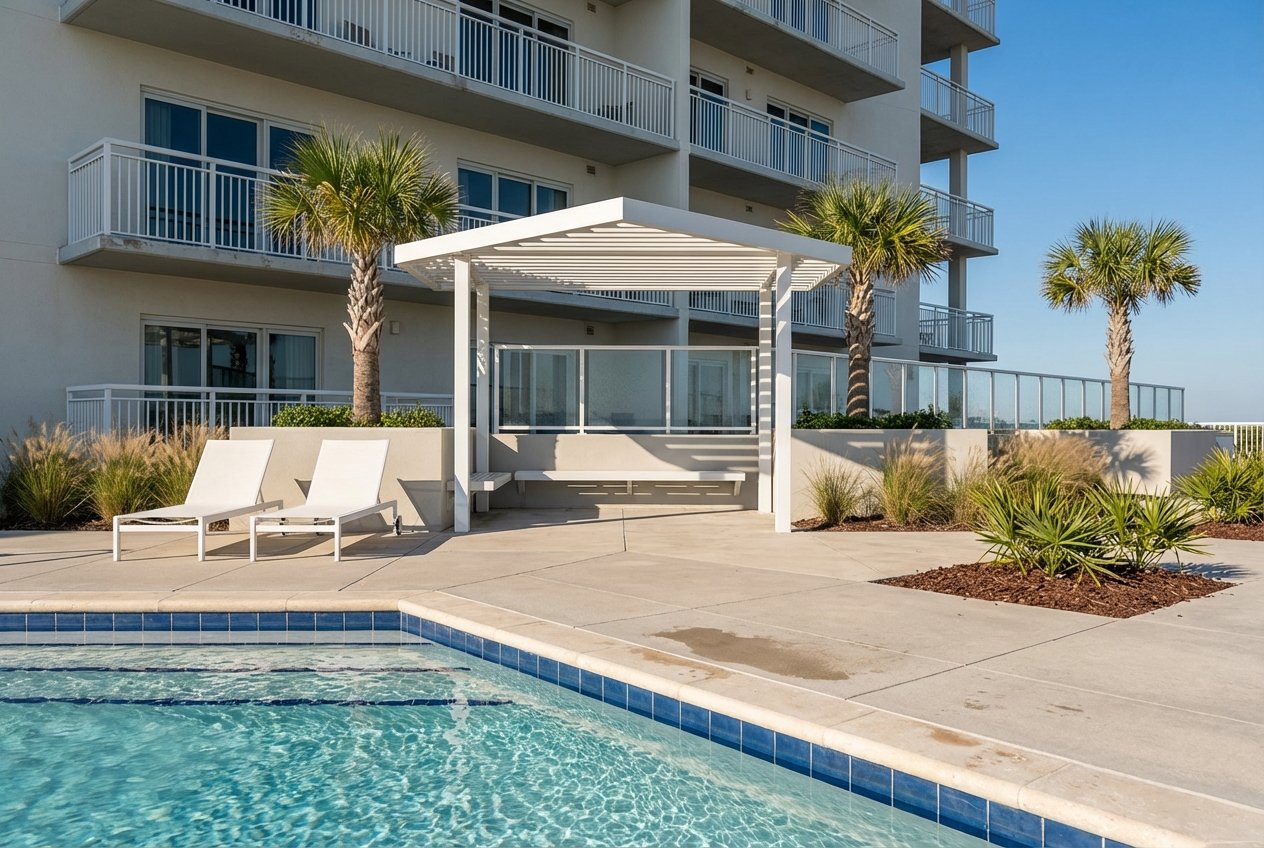
- Components wear faster: roofs, balconies, exterior concrete and steel, windows and doors, sealants, exterior paint, HVAC, pool equipment, and outdoor decks often require more frequent maintenance or higher-spec replacements.
- Marine and shoreline elements: seawalls, bulkheads, dune restoration, and erosion control can be high-cost items subject to permitting and timing.
- Insurance costs: windstorm and flood premiums can be significant and volatile. Deductibles for hurricane or flood claims may be set as a percent of building replacement value.
- Usage patterns: short-term rentals and seasonal demand can increase wear-and-tear on common areas and amenities, which affects maintenance contracts and reserve needs.
Before you buy or list, ask how these factors have been budgeted, insured, and inspected.
Step-by-step due diligence
Use this checklist to read the numbers like a pro and protect your investment.
1) Start with three core documents
- Current adopted budget and the prior 2 to 3 years of budgets.
- The most recent reserve study and funding plan. If no study exists, ask why and when one will be completed.
- Reserve account statements showing actual bank balances and transfers.
2) Confirm funding and trends
- Compare budgeted reserve contributions to the reserve study’s recommendation.
- Review year-over-year trends in reserve balances and operating costs.
- Look for frequent transfers from reserves to operating expenses. That can be a red flag.
3) Review insurance and risk
- Read the insurance declarations for master windstorm and flood coverage. Note limits, premiums, and deductibles.
- Check meeting minutes for storm damage, claim history, or premium spikes.
4) Scan contracts and inspections
- Elevator, roofing, pool, landscaping, pest, and security contracts can explain cost changes.
- Ask for engineering or structural reports on balconies, exterior concrete, roofs, and seawalls.
5) Validate owner payments
- Request delinquency reports and the association’s collection policy. Higher delinquency can strain cash flow.
- Ask about special assessments in the past 5 to 10 years and whether any are pending.
6) Use an estoppel certificate when buying
- An estoppel states current assessments due, any outstanding amounts, and pending special assessments at the unit level. Confirm these numbers before closing.
Red flags to watch
- No reserve study or a study older than 3 to 5 years.
- Percent funded well below the study’s benchmark or minimal contributions despite known coastal wear.
- Repeated or large special assessments over a short period.
- Rising insurance premiums or deductibles not reflected in the budget.
- Transfers from reserves to cover routine operating shortfalls.
- High or rising delinquency and weak collection enforcement.
- Deferred maintenance in minutes with no funding plan or calendar.
- Pending litigation or code issues that could trigger large costs.
Where to access records
You can gather many key documents from official county and state resources, plus your association’s manager.
If you need the exact statute language for disclosures, budgets, reserves, or record inspection, use the Florida Statutes as your primary reference.
How to compare two buildings
When you are choosing between condos on Perdido Key, a quick side-by-side review can reveal the better long-term value.
- Assessments per square foot: normalize the monthly fee by unit size.
- Reserve contribution ratio: reserves as a percent of total expenses.
- Insurance posture: check wind and flood deductibles and recent premium changes.
- Coastal components: does the property have seawalls, extensive balconies, or complex mechanicals that accelerate wear?
- Age and updates: older buildings can be excellent if reserves and restoration projects are on schedule.
Next steps
You can read an HOA budget and reserve study with confidence when you know where to look and which questions to ask. On Perdido Key, the coastal environment raises the stakes, so a clear view of reserves, insurance, and maintenance plans is essential. If you want a second set of eyes before you buy or you are preparing to list, connect with a local specialist who understands Gulf Coast associations and can help you navigate the details.
Ready to move forward with a clear plan? Work with Charlie Guy for concierge guidance on budgets, reserves, and the right Perdido Key fit.
FAQs
What is “percent funded” in a reserve study?
- It is the current reserve balance divided by the fully funded balance, expressed as a percentage, showing how prepared the association is for future projects.
How often should a Florida condo update its reserve study?
- Many associations update every 3 to 5 years or after major projects; ask for the date of the latest study and how often it is revisited.
Where can I find HOA documents for a Perdido Key condo?
Which coastal components most affect reserves on Perdido Key?
- Roofs, balconies and exterior concrete, windows and doors, exterior paint, HVAC, pools and decks, and shoreline elements like seawalls and dunes.
What insurance questions should I ask a condo association?
- Ask for wind and flood policy declarations, coverage limits, deductibles, claim history, and any recent or expected premium increases in the budget.
What documents should I request before making an offer?
- The current and last 2 to 3 years of budgets, the latest reserve study, reserve account statements, meeting minutes, insurance declarations, and an estoppel certificate.